
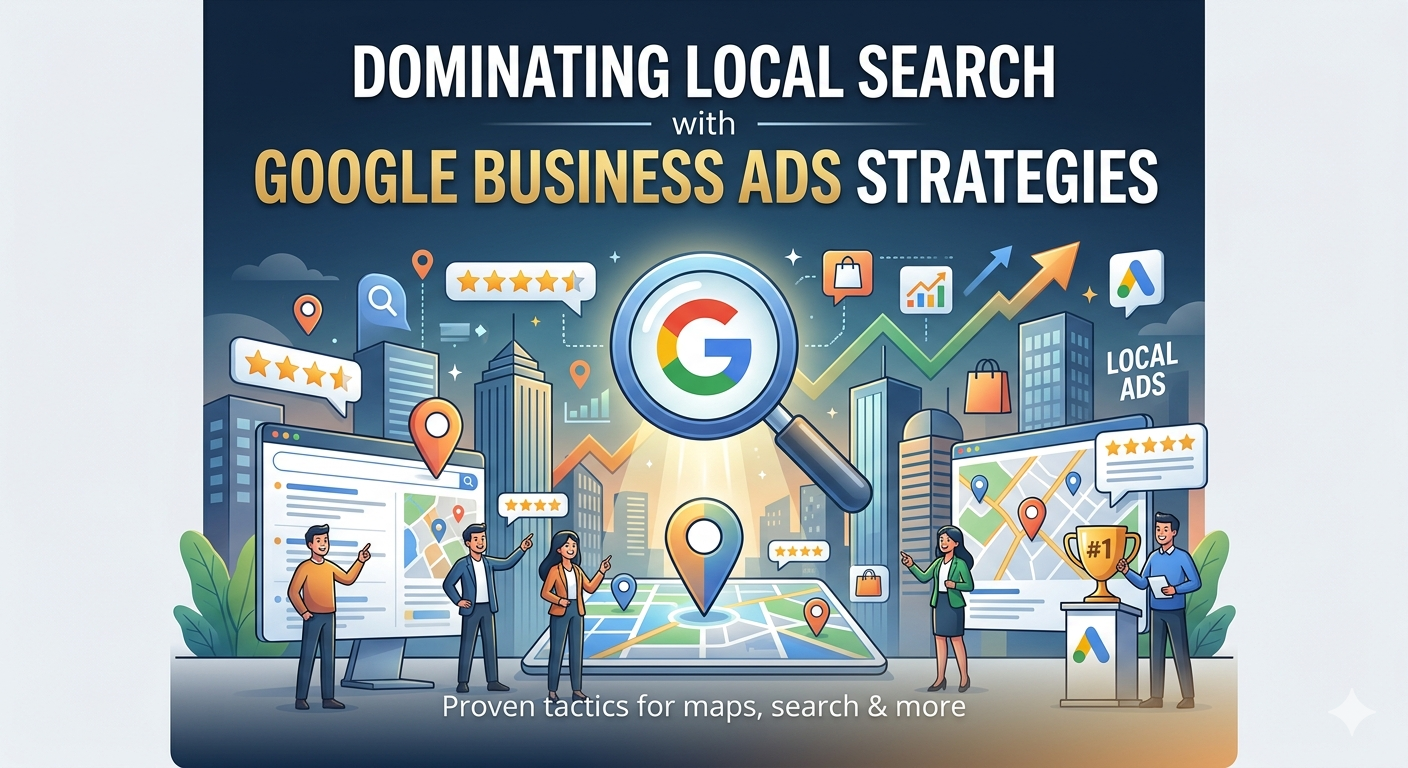
A basic business profile is no longer enough to capture regional market share when customers require immediate, local solutions. The map pack and local search results have become highly competitive spaces where visibility goes to those who back their presence with budget and strategy.
In this blog, we will show local businesses how to turn proximity into profit by combining their organic profile with paid search assets. You can expect to learn how to position your company at the absolute top of neighborhood queries. By the end, you will understand how Google Business Ads secures immediate local dominance.
The Evolution of Proximity-Based Paid Search
The mechanics of capturing nearby customers have changed from simple city-wide targeting into an exact science of physical proximity. Success now requires you to align your budget with the real-time movements of mobile consumers who expect immediate, neighborhood solutions.
- The Shift from Global to Hyper-Local: Targeting broad keywords across an entire province or country wastes your hard-earned marketing budget. You achieve a much higher return on investment when you focus entirely on users sitting within a specific, tight radius around your office. \
Modern local campaigns allow you to drop a pin on your shop and bid only on people walking or driving nearby. This precision means you stop paying for clicks from buyers who live too far away to actually use your services.
- The Anatomy of a Map Ad: Sponsored pins stand out clearly when a consumer opens Google Maps to search for a nearby business. These promoted listings feature a distinctive color or icon that separates your company from the surrounding organic clutter.
People who map out a route often look for immediate stops along their way. Your paid map placement catches their eye at the exact moment they plan their next move.
- Location Assets as Conversion Drivers: You remove massive friction from the customer journey when your ad displays your exact distance and current operating hours. Mobile searchers rarely want to hunt through a website to find out if your doors are open.
These automated extensions feed real-time location data directly into the search results page. A user can see that you are just two miles away and immediately decide to visit your store.
- Capturing High-Intent Mobile Queries: Emergency situations require immediate answers, and click-to-call buttons handle this need perfectly. A homeowner with a burst pipe or a driver stranded on the shoulder does not want to read an entire about-us page.
They click the phone icon on your ad to speak directly with your dispatch team. You win the lead by being the fastest, most accessible option on their screen.
Executing a Dominant Local Advertising Strategy
Winning the local market requires more than just launching a generic campaign. It demands a deep alignment between your business location data and your bidding system.
To convert regional searches into phone calls and foot traffic, you must structure your campaigns around local intent behaviors.
We focus on transforming local proximity into a predictable source of incoming leads. By organizing your strategy around these core pillars, we help you capture nearby demand as it happens:
Synchronizing Ads with Your Local Profile
Linking your ad account to your verified business profile creates a powerful trust-multiplying effect for your brand. Google pulls your organic star rating and total review count directly into your paid text ads.
This synchronization means a shopper sees your excellent reputation before they even click your headline. You should focus on gathering authentic feedback because these ratings transform your standard ad copy into social proof.
Using image extensions adds a layer of community familiarity to your search listings. You can showcase real photos of your service vehicles, your clean storefront, or your actual team members at work.
People like doing business with neighbors they recognize, and these visuals prove you are a real local operation. You must maintain identical name, address, and phone details across your profile and your ads to build this machine-readable trust.
Eliminating Wasted Regional Spend
Radius bidding allows you to set aggressive bids for buyers who live within a five-mile circle of your business location. You can taper your spend downward for prospects who sit further out, balancing your costs against travel times.
This method ensures you spend your heaviest budget on the leads that are easiest for your team to service. You are maximizing your efficiency by matching your bids to your actual operational footprints.
Negative location targeting lets you explicitly block your ads from appearing in specific neighborhoods or cities. This is incredibly useful if a nearby town falls outside your service territory or requires expensive toll travel.
You preserve your budget for high-value zones where your trucks already operate daily. Dayparting also helps by scheduling your ads to run only when your staff is awake to answer the phones.
The Ranksure Framework for Paid Traffic Success
At Ranksure, we focus on building performance campaigns where every dollar links directly to real geographic opportunities and phone calls. Our approach to managing Google Business Ads centers on tracking genuine business growth metrics rather than empty impressions. We monitor actual store visits, form completions, and booked appointments so you know exactly how your budget performs. You receive clear, transparent data that avoids confusing marketing jargon.