
Keyword optimization isn’t as simple as it used to be. Some SEO advice still recommends specific keyword density percentages, while other sources claim keyword density no longer matters. With so much conflicting information, it can be difficult to know how to optimize content effectively.
This guide separates outdated SEO myths from modern best practices, explaining where keywords should be placed, whether keyword density still matters, and how to optimize content naturally for both users and search engines.
What Is Keyword Density?
Keyword density measures how often a target keyword appears in a piece of content relative to the total word count. It has been used as an indicator of how strongly a page focuses on a particular topic.
SEO practitioners used to treat keyword density as a ranking factor, aiming for fixed percentages, believing that more repetition improved visibility. Modern search engines, however analyze whether the content comprehensively answers the user’s query.
That doesn’t mean keyword density is irrelevant. Using your primary keyword naturally throughout a page still reinforces its topic, but it should be a byproduct of thorough writing rather than a numerical goal.
How Keyword Density Is Calculated
The standard formula is:
Keyword Density = (Keyword Count ÷ Total Word Count) × 100
For example, if a 2,000-word article contains the phrase “keyword density” 20 times:
(20 ÷ 2,000) × 100 = 1%
This calculation is simple, but it has an important limitation: it measures frequency without considering context. A page can achieve a 1% density while providing little useful information, or rank highly with a much lower density because it better satisfies search intent.
Keyword Density vs. Keyword Frequency
Although the terms are used interchangeably, they are not identical.
- Keyword frequency is the total number of times a keyword appears.
- Keyword density expresses that frequency as a percentage of the page’s total word count.
Frequency provides raw counts, while density normalizes those counts across articles of different lengths. Neither metric reflects content quality, topical depth, or semantic relevance, which are far more influential in modern search rankings.
What Is Keyword Placement?
Keyword placement refers to the strategic positioning of keywords in locations that help search engines and readers quickly understand what a page is about.
Unlike keyword density, placement considers where keywords appear rather than how often they are repeated. A single mention in a page title typically carries more contextual value than several mentions buried deep within the body content.
Effective keyword placement improves both SEO and user experience. Readers scan titles, headings, and opening paragraphs before deciding whether to continue reading. Search engines follow a similar pattern by analyzing structural elements that communicate the page’s primary topic.
Why Placement Matters More Than Density
Search engines no longer rely on keyword repetition as a primary relevance signal. Advances in natural language processing allow them to interpret relationships between words, recognize synonyms, and understand the overall subject of a page.
As a result, strategically placing your primary keyword in prominent locations is generally more effective than repeating it throughout the content.
For example, including a target keyword in the page title, H1 heading, URL, and introductory paragraph clearly establishes the page’s focus. Repeating that same keyword in every paragraph adds little value and can make the writing feel forced.
Placement also improves usability. Readers can immediately confirm that the content matches their search intent when they see relevant terms in headings and introductory text.
Keyword Placement vs. Keyword Insertion
Keyword placement and keyword insertion are related but distinct concepts.
Keyword placement is a deliberate optimization strategy. It focuses on placing important terms in locations that naturally reinforce the page’s topic.
Keyword insertion, by contrast, simply involves adding a keyword wherever possible. When used without considering readability or context, insertion results in awkward phrasing and contributes to keyword stuffing.
The difference lies in intent. Effective placement enhances clarity, while excessive insertion prioritizes search engines over readers.
Does Keyword Density Still Matter for SEO?
Keyword density is no longer a direct ranking factor in the way it was perceived during the early years of SEO. However, dismissing it entirely would also be inaccurate.
Modern search engines still analyze the words used on a page to understand its subject. If a target keyword never appears—or appears only once—it will be difficult for search engines to confidently identify the page’s primary focus.
The goal is to use keywords naturally enough that the topic is unmistakable.
Google’s Position on Keyword Density
Google has never recommended an ideal keyword density. Instead, it advises creating helpful, people-first content, avoiding keyword stuffing, and covering topics comprehensively.
This reflects modern search systems that evaluate overall relevance and content quality rather than keyword percentages.
How Modern Search Engines Understand Content
Modern search engines analyze content at a conceptual level rather than matching exact strings of text.
They recognize relationships between terms, understand synonyms, identify entities such as people, organizations, products, and locations, and evaluate whether a page covers a topic in sufficient depth.
For example, an article about keyword optimization might naturally include terms such as search intent, title tags, semantic SEO, internal links, and content relevance. Together, these concepts reinforce the page’s topical authority even if the exact target keyword appears only a limited number of times.
Why Search Intent Has Replaced Density Targets
Search intent has become one of the strongest indicators of content quality.
When someone searches for “keyword density,” they are typically looking for more than a definition. They also want to know whether keyword density still matters, how to calculate it, where keywords should be placed, what mistakes to avoid, and how modern search engines evaluate content.
A page that addresses these related questions is far more likely to satisfy users than one that simply repeats the target phrase dozens of times.
This is why comprehensive topical coverage consistently outperforms mechanical keyword repetition.
When Keyword Density Is Still Useful
Although density should never drive your writing, it can still serve as a diagnostic metric.
For example, checking keyword density can help you identify situations where:
- The primary keyword barely appears, making the page’s focus unclear.
- A keyword is repeated excessively, reducing readability.
- Similar pages are unintentionally targeting the same terms.
- Content revisions have removed important topical signals.
Viewed this way, keyword density is a quality-control metric rather than an optimization target.
How Search Engines Interpret Keywords
Search engines have become increasingly effective at understanding meaning instead of simply matching words. This evolution has transformed keyword optimization from a counting exercise into a broader process of building topical relevance.
Exact-Match vs. Partial-Match Keywords
Exact-match keywords remain useful in prominent locations such as page titles and headings because they clearly communicate the page’s primary topic.
However, relying exclusively on exact-match phrases can make content repetitive and unnatural.
Partial matches, reordered phrases, and descriptive variations provide the same contextual signal while improving readability. Using both exact and natural variations creates a better balance between optimization and user experience.
Synonyms, Variants, and Semantic Relevance
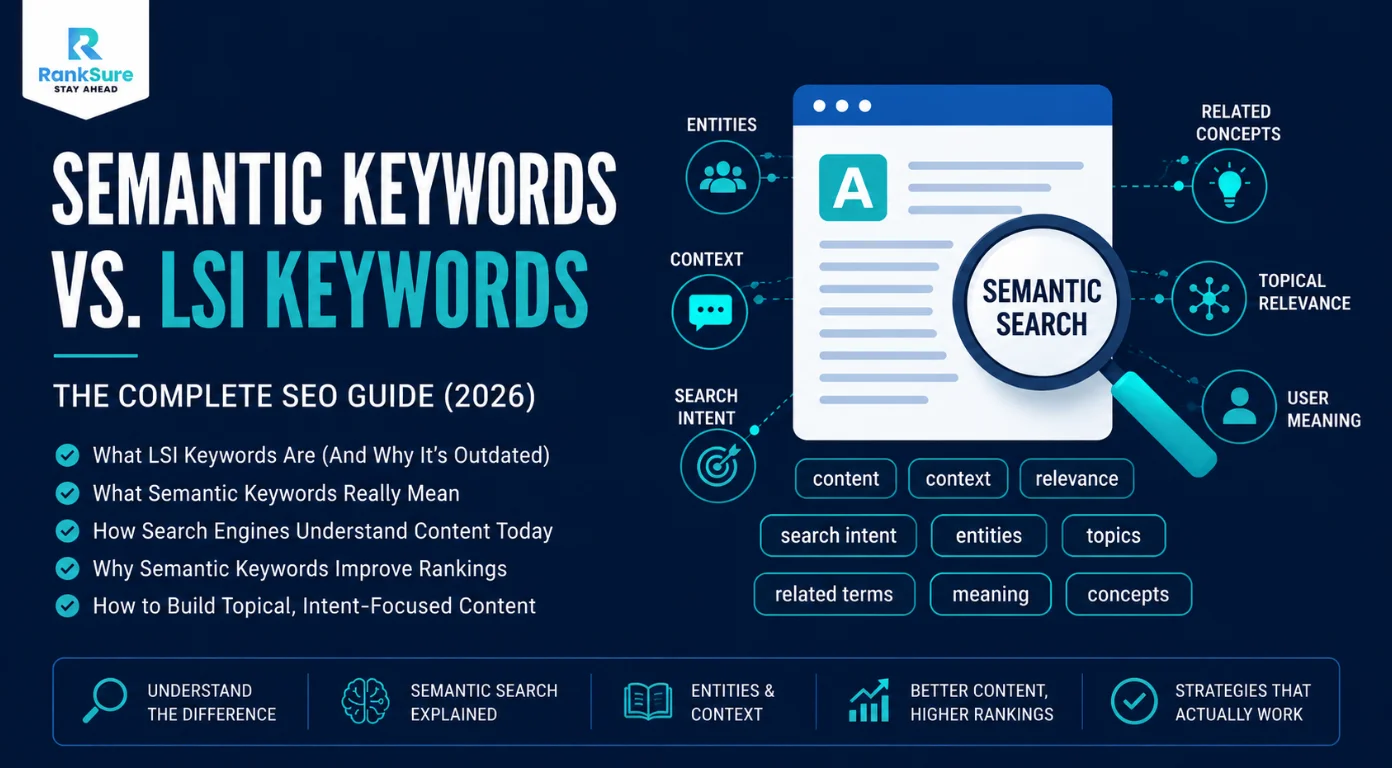
Modern search engines understand that multiple phrases can express the same concept.
Instead of repeating one keyword, strengthen topical relevance by naturally incorporating related terminology. An article about keyword density, for example, may also reference keyword frequency, search term prominence, content optimization, semantic SEO, on-page optimization, and long-tail keywords.
These semantic relationships help search engines build a richer understanding of the page while making the writing more engaging for readers.
Entities, Topical Coverage, and Context
Search engines increasingly rely on entities—distinct people, places, concepts, organizations, and products—to understand content.
Rather than evaluating isolated keywords, they analyze how entities connect within a broader topic. An article that discusses search intent, on-page SEO, title tags, internal linking, structured content, and semantic relevance demonstrates a deeper understanding than one focused solely on repeating a target phrase.
Comprehensive topical coverage also reduces ambiguity, making it easier for search engines to determine whether a page fully satisfies a user’s query.
TF-IDF, Vector Embeddings, and Why Context Beats Repetition
Simple keyword density measures every occurrence equally. Modern retrieval systems are considerably more sophisticated.
Traditional information retrieval models introduced concepts such as TF-IDF (Term Frequency-Inverse Document Frequency), which evaluates how important a term is within a document compared with a broader collection of documents. More recent search systems go further by using vector embeddings that represent the meaning of words, sentences, and entire passages. This allows search engines to recognize conceptual similarity even when the exact wording differs.
The practical takeaway is straightforward: focus on explaining a topic thoroughly and naturally. Strong topical coverage, semantic relationships, and clear organization provide more value than repeatedly inserting the same keyword. When your content genuinely answers the reader’s question, appropriate keyword usage typically follows on its own.
Where to Place Keywords for Maximum SEO Value
Strategic keyword placement helps search engines and readers quickly understand what a page is about. Focus on placing your primary keyword in key locations rather than repeating it throughout the content.
Primary Placement Locations
The following elements have the greatest impact because they define what the page is about before readers reach the main content.
Title Tag
The title tag is one of the strongest on-page relevance signals. Including the primary keyword near the beginning of the title can help both search engines and users immediately identify the page’s focus.
Keep titles descriptive rather than stuffing multiple keyword variations into a single line. A clear, compelling title typically performs better than one written solely for search engines.
URL
A short, descriptive URL that contains the primary keyword makes the page easier to understand and share.
For example:
Good:
example.com/keyword-density-placement
Less effective:
example.com/blog/post-123-seo-keyword-density-placement-guide-2026-best-tips
Avoid changing established URLs purely for SEO, as doing so may affect existing rankings and backlinks unless proper redirects are implemented.
Meta Description
Although the meta description is not a direct ranking factor, it influences click-through rate by summarizing the page in search results.
Including the primary keyword naturally can reassure users that the page matches their query, especially since search engines highlight matching terms in search snippets.
Focus on accurately describing the page rather than treating the description as another place to repeat keywords.
H1 Heading
Your H1 should clearly communicate the page’s primary topic and usually include the target keyword or a close variation.
An effective H1 prioritizes clarity over exact-match optimization. Readers should immediately understand what the article will cover.
Opening Paragraph
Introduce the primary keyword within the first 100–150 words whenever it fits naturally.
The introduction should explain the topic and set expectations—not simply repeat the keyword multiple times.
Secondary Placement Locations
After establishing the page’s topic, use keywords and related concepts to reinforce relevance throughout the content.
H2 and H3 Headings
Subheadings help organize information for both readers and search engines.
Instead of forcing the exact keyword into every heading, use descriptive language and semantic variations where appropriate. This improves readability while expanding topical coverage.
Body Content
The body should naturally incorporate the primary keyword alongside related terms, synonyms, and supporting concepts.
Rather than counting keyword occurrences, focus on answering the user’s questions comprehensively. Thorough coverage naturally introduces the vocabulary associated with the topic.
Image File Names and Alt Text
Images provide additional opportunities to reinforce topical relevance.
Use descriptive file names and alt text that accurately describe the image. Include keywords only when they genuinely reflect the image’s content rather than adding them for SEO alone.
For example, an image illustrating the keyword density formula might use descriptive alt text such as:
“Formula used to calculate keyword density in SEO.”
Internal Anchor Text
Internal links help search engines understand relationships between pages.
Anchor text should describe the destination page naturally. Using a variety of descriptive anchors is generally more effective than repeating the same exact-match keyword throughout a website.
Conclusion and Calls to Action
Mentioning the primary topic in the conclusion reinforces the article’s central message and creates a logical ending.
If the page includes a call to action, integrate keywords only when they fit naturally. Calls to action should encourage the next step without sounding repetitive or overly optimized.
Keyword Density & Placement Best Practices
Modern keyword optimization is less about formulas and more about creating content that clearly satisfies user intent. The following principles consistently produce stronger results than chasing arbitrary SEO metrics.
Write Naturally Instead of Chasing Percentages
There is no universal keyword density that guarantees higher rankings.
Instead of aiming for a specific percentage, write as you normally would, then review the content to ensure the primary keyword appears in the most important locations. If the writing feels repetitive, reduce unnecessary repetition rather than trying to preserve a target density.
Natural language almost always produces a better user experience.
Match Search Intent First
Every keyword represents an underlying goal.
Someone searching for “keyword density and placement” expects more than a definition—they want practical guidance on optimizing content in today’s search landscape.
Before publishing, ask whether the page fully answers the user’s likely questions. If the content satisfies search intent, keyword usage typically becomes more natural because the discussion remains focused on the topic.
Use Primary, Secondary, and Long-Tail Keywords Naturally
Most pages should target a primary keyword while also incorporating closely related phrases.
For example, a page targeting keyword density and placement might naturally include terms such as:
- keyword frequency
- keyword optimization
- search intent
- semantic SEO
- exact-match keywords
- long-tail keywords
- content relevance
- on-page SEO
These supporting terms help search engines understand the topic more completely without requiring excessive repetition of the primary keyword.
Cover Topics Comprehensively with Semantic Variations
Comprehensive coverage is more valuable than repetitive wording.
Instead of repeating the same phrase, explain related concepts that users expect to learn. This approach increases topical depth while making the article more useful.
A comprehensive guide about keyword optimization naturally discusses search intent, content structure, internal linking, semantic relevance, entities, user experience, and topical authority because these concepts are closely connected.
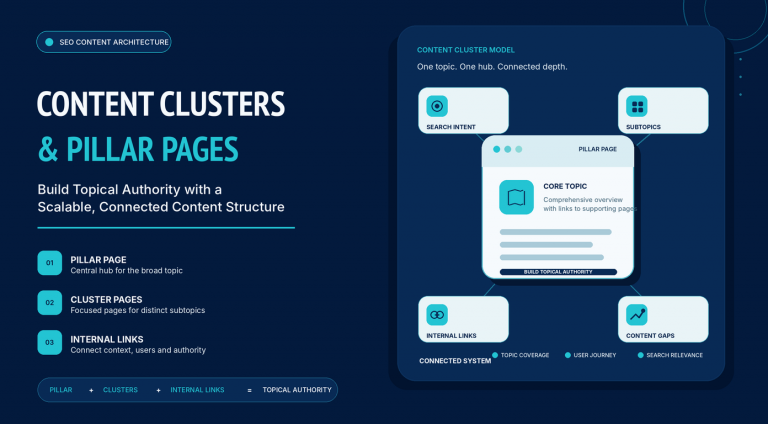
Build Topic Clusters Instead of Repeating Keywords
Individual pages perform better when they exist within a broader topical ecosystem.
Rather than creating multiple articles targeting slight keyword variations, develop a pillar page supported by related articles covering subtopics in greater depth.
For example, this article could link to dedicated guides on:
- Search intent
- On-page SEO
- Semantic SEO
- Keyword research
- Topical authority
- Internal linking
This structure strengthens topical authority while reducing unnecessary keyword repetition across your website.
Keyword Stuffing vs. Natural Optimization
Keyword stuffing refers to the excessive or unnatural repetition of keywords in an attempt to influence search rankings.
Natural optimization focuses on communicating ideas clearly while reinforcing topical relevance through context rather than repetition.
What Keyword Stuffing Is
Keyword stuffing occurs whenever keywords are added primarily for search engines instead of readers.
Examples include:
- Repeating the same phrase in nearly every sentence.
- Forcing exact-match keywords into headings where they don’t fit.
- Listing keywords without meaningful context.
- Hiding keywords in text, code, or image attributes.
These practices add little informational value and can reduce the perceived quality of a page.
Signs of Over-Optimized Content
Over-optimized content displays recognizable patterns.
Common warning signs include:
- The same keyword appears repeatedly in consecutive paragraphs.
- Headings contain awkward exact-match phrases.
- Sentences sound unnatural because keywords interrupt the flow.
- Multiple keyword variations are forced into a single paragraph.
- Internal links repeatedly use identical anchor text.
If readers notice the optimization, it is probably excessive.
How Keyword Stuffing Hurts Rankings and User Experience
Search engines increasingly reward pages that demonstrate expertise, relevance, and helpfulness.
Excessive keyword repetition works against these goals by reducing readability and making content appear manipulative.
Over-optimization can also obscure the page’s main message. Instead of expanding on related concepts, the content repeatedly returns to the same phrase, limiting topical depth and making the article less useful.
For users, repetitive content increases cognitive load and reduces trust, particularly when the writing appears designed for algorithms rather than people.
How to Fix Over-Optimized Content
Improving an over-optimized page requires simplifying rather than adding more text. Start by identifying repeated keywords that do not contribute additional meaning.
Then:
- Replace unnecessary repetitions with natural pronouns or descriptive language.
- Introduce semantic variations where appropriate.
- Expand thin sections with genuinely useful information instead of repeating existing points.
- Rewrite awkward headings so they read naturally.
- Ensure every paragraph introduces a new idea.
Measuring Keyword Density Effectively
Keyword density is best treated as a diagnostic metric rather than a performance metric. Measuring it can help identify obvious optimization issues, but it should never determine how you write.
Manual Calculation
The simplest way to calculate keyword density is with the standard formula:
Keyword Density = (Keyword Count ÷ Total Word Count) × 100
For example, if a 1,500-word article contains the primary keyword 18 times:
(18 ÷ 1,500) × 100 = 1.2%
This calculation provides a quick overview of keyword usage but says nothing about content quality, search intent, or topical completeness.
Using Keyword Density Checkers
Many SEO tools include keyword density reports that display:
- Keyword frequency
- Density percentage
- Phrase distribution
- Prominence in headings
- Related keyword usage
These tools are useful for identifying unusually high or low keyword usage, but they should not be used to chase a specific percentage. Instead, use them to spot potential issues during your final content review.
How to Interpret Density Reports
A density report should raise questions rather than provide answers.
For example:
- Extremely low density may indicate that the page never clearly establishes its topic.
- Extremely high density may suggest unnecessary repetition.
- Uneven keyword distribution could reveal sections that are over-optimized while others lack topical focus.
Always evaluate these findings alongside readability and search intent rather than making changes based solely on numbers.
When Density Metrics Are Actually Helpful
Keyword density reports are most valuable during content audits.
They can help you:
- Identify pages with excessive repetition.
- Compare competing pages targeting similar topics.
- Review older content written before modern SEO practices.
- Ensure important keywords haven’t been removed during editing.
Beyond these scenarios, density metrics offer diminishing value compared with evaluating content quality, topical coverage, and user satisfaction.
Practical Workflow for Optimizing Keyword Density and Placement
Rather than optimizing keywords as a final step, integrate them into your content creation process from the beginning.
1. Start with Search Intent
Identify what users actually expect when searching the target keyword.
Review the search results to understand whether people are looking for a definition, tutorial, comparison, checklist, or buying guide. Your content should satisfy that intent before considering keyword frequency.
2. Identify Primary and Supporting Keywords
Choose one clear primary keyword supported by closely related terms.
Supporting keywords should expand the topic naturally instead of competing with the primary phrase. This helps create comprehensive content while avoiding unnecessary repetition.
3. Optimize High-Impact Locations
Place the primary keyword where it provides the greatest contextual value:
- Title tag
- URL
- H1 heading
- Opening paragraph
- Relevant subheadings
- Meta description
Once these elements are optimized, allow the remainder of the article to develop naturally.
4. Improve Semantic Coverage
Review the content for concepts rather than keywords.
Ask whether you’ve addressed the questions, entities, and related topics users expect to see. Expanding topical coverage improves relevance more effectively than increasing keyword frequency.
5. Review Readability and Natural Language
The final editing pass should focus on the reader.
Remove repetitive wording, simplify overly optimized sentences, and ensure every paragraph contributes new information. If a keyword feels forced, rewrite the sentence rather than forcing the keyword to remain.
Advanced Keyword Optimization Techniques
Keyword Prominence and Proximity
Keyword prominence refers to how early and visibly a keyword appears within important page elements.
Keywords appearing naturally in the title, H1, and opening paragraph establish relevance more effectively than those appearing only near the end of the article.
Keyword proximity refers to the distance between related words. Search engines can understand phrases even when words are separated, but keeping naturally connected terms reasonably close together improves clarity for both readers and algorithms.
Entity Optimization and Google’s Knowledge Graph
Search engines increasingly organize information around entities instead of isolated keywords.
An entity can be a person, organization, location, product, or concept with a distinct identity. Google’s Knowledge Graph helps connect these entities and understand their relationships.
For example, an article about keyword optimization becomes more authoritative when it naturally discusses concepts such as search intent, semantic SEO, title tags, internal linking, content relevance, and user experience. These related entities reinforce the page’s topical context without requiring excessive keyword repetition.
Topical Authority Through Comprehensive Coverage
Topical authority is earned by consistently publishing high-quality content that covers a subject from multiple perspectives.
A single article should thoroughly answer its primary topic, while related articles expand on connected subjects such as keyword research, content optimization, search intent, semantic SEO, and technical SEO.
This interconnected approach signals expertise more effectively than producing numerous pages targeting slight keyword variations.
Content Depth and Information Gain
Search engines increasingly prioritize content that adds value beyond what already exists.
Information gain doesn’t necessarily mean presenting original research. It can also involve:
- Explaining why a best practice works.
- Clarifying common misconceptions.
- Comparing similar concepts.
- Discussing limitations and trade-offs.
- Connecting ideas that competitors treat separately.
For example, many articles state that keyword density no longer matters. A more valuable explanation is that keyword density has shifted from being viewed as a ranking factor to serving as a diagnostic metric, while search engines now rely more heavily on semantic relationships, entities, and user intent to evaluate relevance.
Common Keyword Density Myths and Mistakes
Many outdated SEO practices persist because they were once effective or continue to circulate in marketing communities. Understanding these misconceptions helps prevent unnecessary optimization.
Myths
There Is an Ideal Keyword Density Percentage
No universal percentage guarantees rankings. Different topics, content formats, and search intents naturally produce different keyword frequencies. Trying to achieve a specific density leads to awkward writing without improving relevance.
More Keywords Mean Better Rankings
Repeating a keyword does not make a page more authoritative. Search engines reward pages that comprehensively answer user questions, not those with the highest keyword count.
Every Heading Needs the Exact Keyword
Headings should organize information, not repeat the same phrase. Using descriptive headings and semantic variations improves readability while broadening topical coverage.
Exact-Match Keywords Always Perform Better
Exact-match keywords remain useful in strategic locations, but modern search engines understand synonyms, related phrases, and natural language.
Mistakes
The most common optimization mistakes include:
- Obsessing over keyword density percentages instead of content quality.
- Ignoring search intent while focusing on keyword frequency.
- Using identical anchor text for every internal link.
- Neglecting semantic variations and related concepts.
- Writing primarily for search engines rather than human readers.
Most of these mistakes stem from treating keywords as the objective instead of using them to support clear communication.
Conclusion
Keyword density and keyword placement still play an important role in on-page SEO, but neither should be treated as a ranking formula. Modern search engines evaluate context, topical relevance, and search intent far more than keyword repetition.
Focus on placing keywords strategically, covering topics comprehensively, and writing naturally. When content is genuinely helpful, effective keyword optimization follows naturally.
Frequently Asked Questions
What does keyword density mean?
Keyword density is the percentage of times a keyword appears relative to the total number of words in a piece of content. It provides a measure of keyword frequency but should be used as a diagnostic metric rather than a ranking target.
What is keyword placement?
Keyword placement refers to where important keywords appear within a page, such as the title tag, URL, headings, opening paragraph, and body content. Strategic placement helps establish topical relevance without requiring excessive repetition.
Does keyword density matter anymore?
Yes, but not in the way it once did. Modern search engines prioritize search intent, semantic relevance, topical coverage, and content quality over achieving a specific keyword density percentage.
What keyword density percentage is recommended?
There is no officially recommended percentage. Instead of aiming for a fixed number, ensure the primary keyword appears naturally in prominent locations while the content comprehensively addresses the topic.
What is an example of keyword insertion?
Adding the phrase “keyword density” to a page title because it accurately reflects the topic is an example of appropriate keyword insertion. Repeating the same phrase unnaturally throughout every paragraph would be considered over-optimization.
What are the four types of keywords?
The four common keyword categories are:
- Informational
- Navigational
- Commercial investigation
- Transactional
Each reflects a different stage of the user’s search journey and should influence the type of content you create.